Research & development
Van der Knaap Group has its own Research & Development department. In innovation centre 'de Kas' we have an extensive laboratory and R&D greenhouses where various growing conditions can be simulated. In 'de Kas' we continuously work on optimising existing products and developing new ones.
We regularly publish articles about trials and developments on our newspage.
A selection of recent innovations:
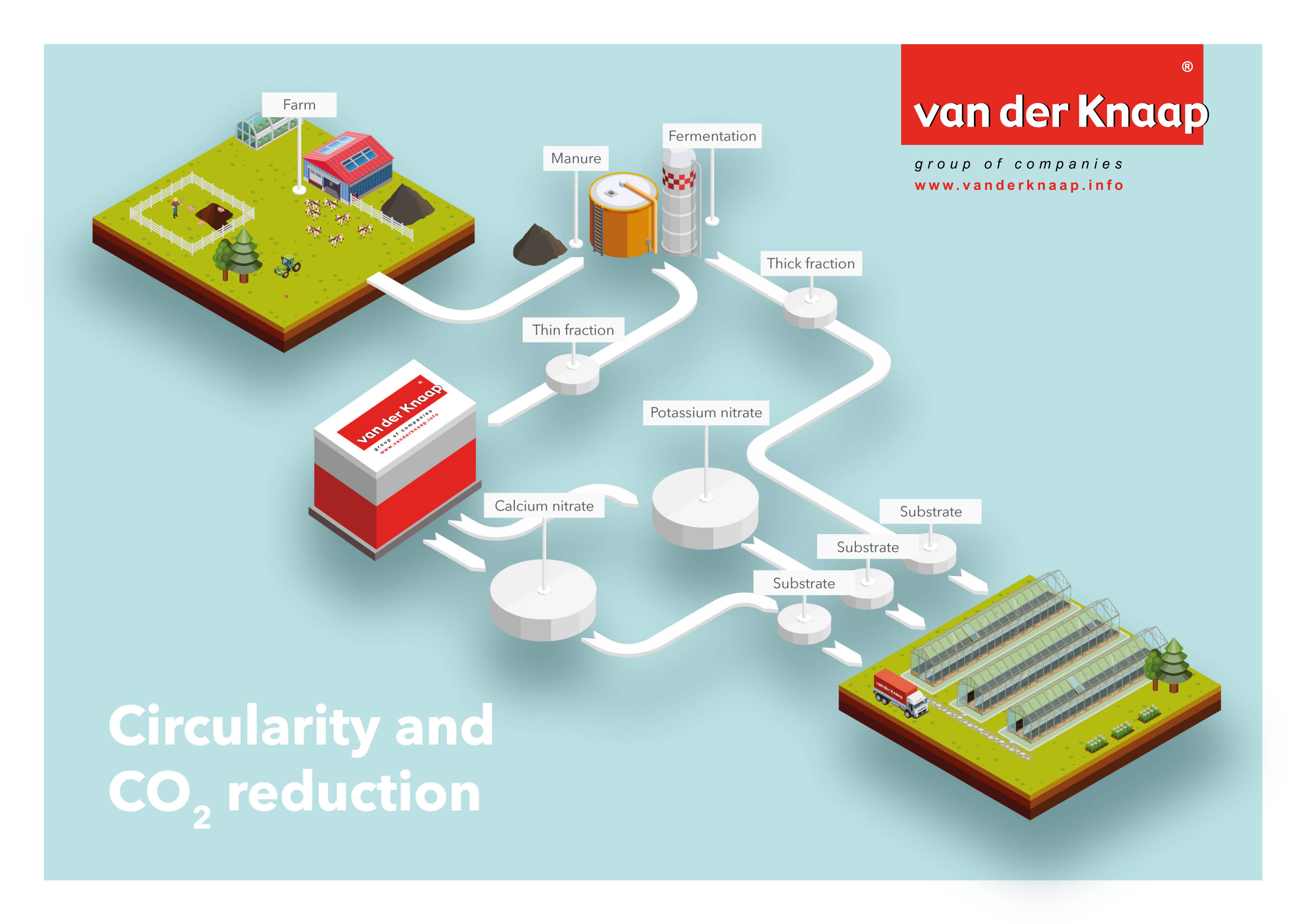 From waste to fertiliser
With its Organic Water System (OWS), Van der Knaap has an excellent in house system that can process multiple raw material flows. New research focuses on processing residuals from livestock farming (slurry) and organic residual flows from horticulture (e.g. plant residues) into organic fertilisers for the horticultural sector. It is a way of linking the agricultural sector to circular horticulture.
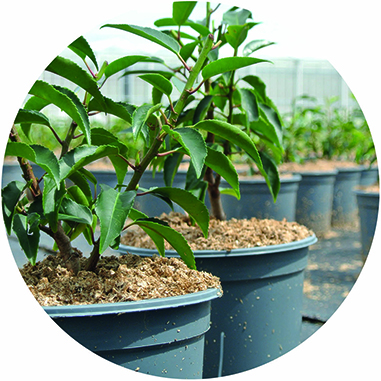 Renewable and circular resources
Van der Knaap is constantly looking for (more) sustainable solutions for rooting and plant growing. Van der Knaap's Research & Development team are investigating different renewable and circular resources. Having completed several standardised growth trials and extensive physical and chemical analyses, the most promising resources were put through to the next phase of testing. Since then, a number of resources have reached this phase and are showing promising results!
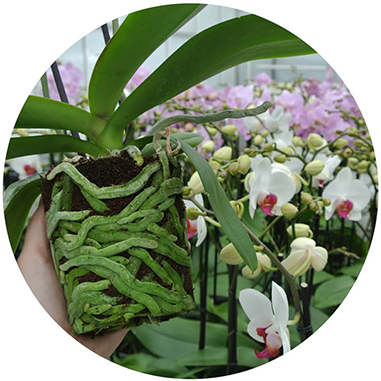 Pot worm control by choosing the right substrate
Van der Knaap has been supplying substrate for the cultivation of Phalaenopsis and other orchids for over ten years. In recent years, products have been developed for the cultivation and propagation of orchids. The Fibre-Neth® plug for the propagation of plant material from tissue culture is now indispensable.
The Fibre-Neth® substrate quickly absorbs water and nutrients and dries evenly. What’s more, the larva of the Lyprauta mosquito (pot worm) has no chance of developing because of the structure of the substrate. The unique structure disturbs pot worm larva development and limits the damage.